

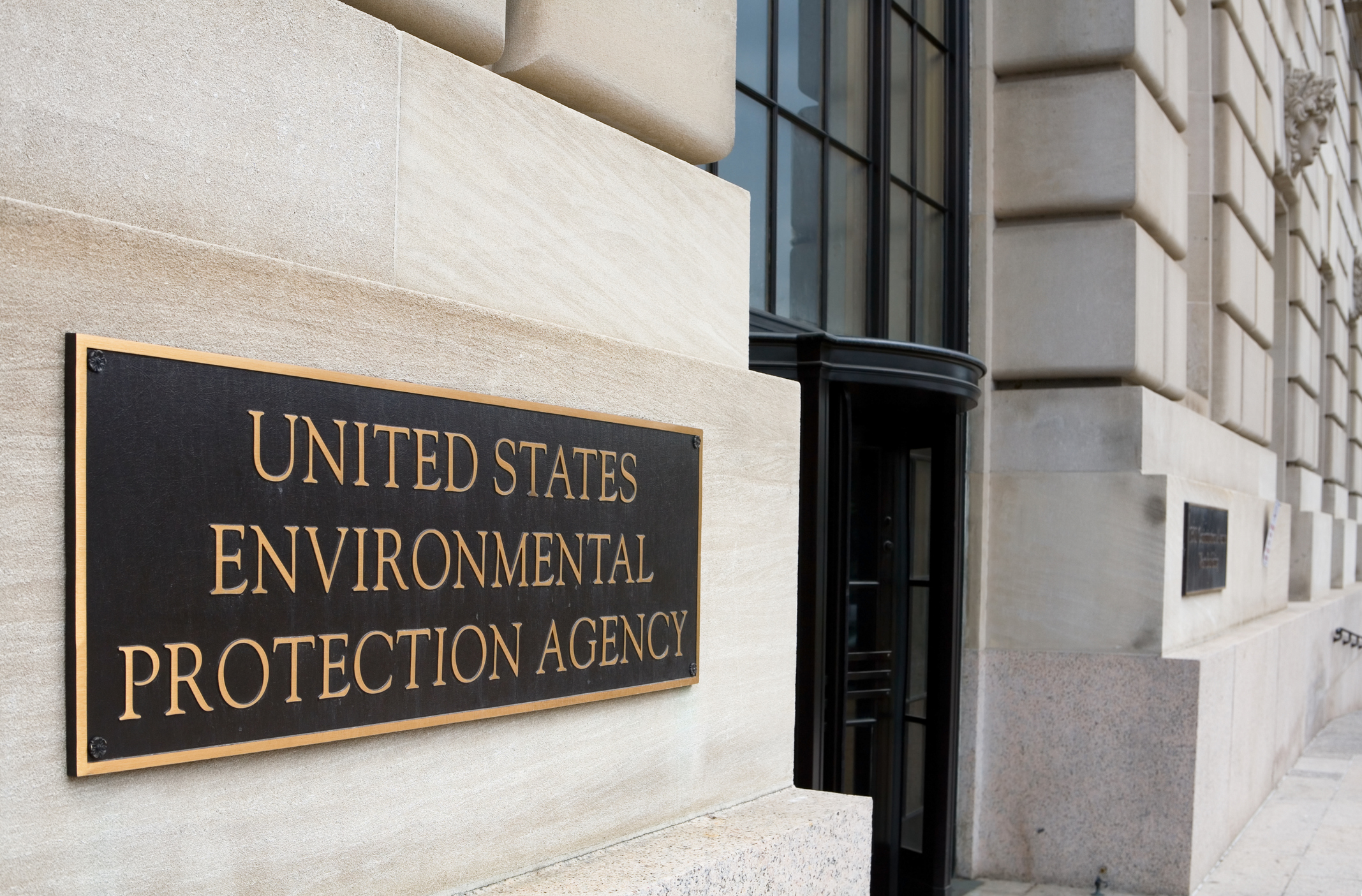
The Environmental Protection Agency on Oct. 26 launched its first agencywide PFAS Technology, Evaluation, Coordination, and Harmonization (PFAS TECH) strategy, which it describes as an effort to “catapult technology innovation on PFAS” while giving communities practical tools, funding, and technical assistance for local PFAS problems.
EPA has committed to carrying out the strategy actions across its National Program Offices and Regional Offices over the next two years. A stated focus is ensuring that local decisionmakers and the public can access PFAS technology information that is “up-to-date, easy to navigate and understand.”
For companies facing PFAS exposure, water systems preparing for compliance, and lawyers handling PFAS litigation, the strategy signals where EPA is putting its scientific and financial resources. It is not a regulation. It is a roadmap for technology, and that technology could shape cleanup expectations, remedy selection, and cost arguments.
Three Pillars
The strategy rests on three goals: powering innovation in research and development, demonstrating what is possible through pilot-scale projects, and translating progress into practical action. EPA stresses collaboration with federal partners, states, local leaders, universities, and the private sector, which it frames as part of the administration’s commitment to “cooperative federalism.”
Pillar One: Research and Development
EPA’s Office of Water is exploring Cooperative Research and Development Agreements (CRADAs) and is working with private laboratories to speed up the development of analytical methods for measuring PFAS in drinking water. It is also partnering with manufacturers of emerging technologies, such as novel sorbents, to share data and accelerate evaluations.
Several technologies receive particular attention:
- Foam fractionation:
EPA plans multi-vendor field tests of this “new lower cost technology” with drinking water utilities.
- Supercritical water oxidation (SCWO):
EPA’s evaluation achieved greater than 99.99-percent destruction of PFAS in aqueous film-forming foam (AFFF) using an industrial-scale system.
- Hydrothermal Alkaline Treatment (HALT):
This thermochemical process uses sodium or potassium hydroxide under subcritical water conditions to break carbon-fluorine bonds. EPA says it has shown promising results in pilot projects.
EPA also intends to award grants for PFAS destruction research through its Science to Achieve Results (STAR) and Small Business Innovation Research (SBIR) programs.
Pillar Two: Real-World Pilots
The second pillar moves the technology out of the lab and into Superfund sites, military installations, wastewater plants, and drinking water systems. Through its RECESS program, the Office of Water is working with about 40 drinking water utilities to identify the best treatment methods at minimal cost to those systems. EPA’s Office of Land and Emergency Management (OLEM) is exploring potential pilot projects with the Department of War and the Department of Energy, with an emphasis on in situ destruction and techniques that avoid costly “dig and haul” remediation. Military sites, many tied to AFFF use, feature prominently.
Two items deserve close attention from litigators. First, OLEM is developing a framework for managing soil with low concentrations of PFAS from non-point or diffuse sources. It held six public engagement sessions with stakeholders, including the construction industry, in April and May. Second, a pilot at a Superfund site in South Carolina is testing incremental sampling, which EPA says, “could dramatically lower sampling and analytical costs”. The same site hosts a bioremediation proof-of-concept project aimed at reducing PFAS in soil and groundwater while preserving the soil for future agricultural use. Both developments could affect how contamination is characterized and how much investigation costs, and those questions are often contested in cost-recovery and toxic tort cases.
EPA is also studying disposal pathways. EPA and external partners are conducting emissions stack testing at an Ohio incinerator, and Region 5 is evaluating whether gasification at sewage sludge incinerators can address PFAS in biosolids. Those results could inform disputes over incineration and land application of biosolids.
Pillar Three: Practical Tools and Funding
The most visible deliverable will be the PFAS Break the Bond Navigator. This public, searchable online tool will help states and local leaders find “right-sized” destruction and removal technologies, building on EPA’s most recent Destruction and Disposal Guidance, and will be updated on a rolling basis. EPA will also continue distributing Emerging Contaminant funding under the Infrastructure Investment and Jobs Act through the State Revolving Funds. The agency will also continue its PFAS OUT initiative, which helps drinking water systems prepare to comply with federal standards for PFOA and PFOS.
Takeaways
The strategy’s repeated focus on cost-effective, scalable, and “right-sized” solutions is notable. As EPA validates lower-cost treatment and sampling methods, those benchmarks may shape what regulators, courts, and opposing experts treat as a feasible and reasonable remedy.
EPA is inviting stakeholders to take part and can be reached at PFASTECH@epa.gov. Companies, utilities, and their counsel should track the Navigator’s rollout and the pilot results, which may soon become the benchmarks against which PFAS remedies, and the arguments over them, are measured.