

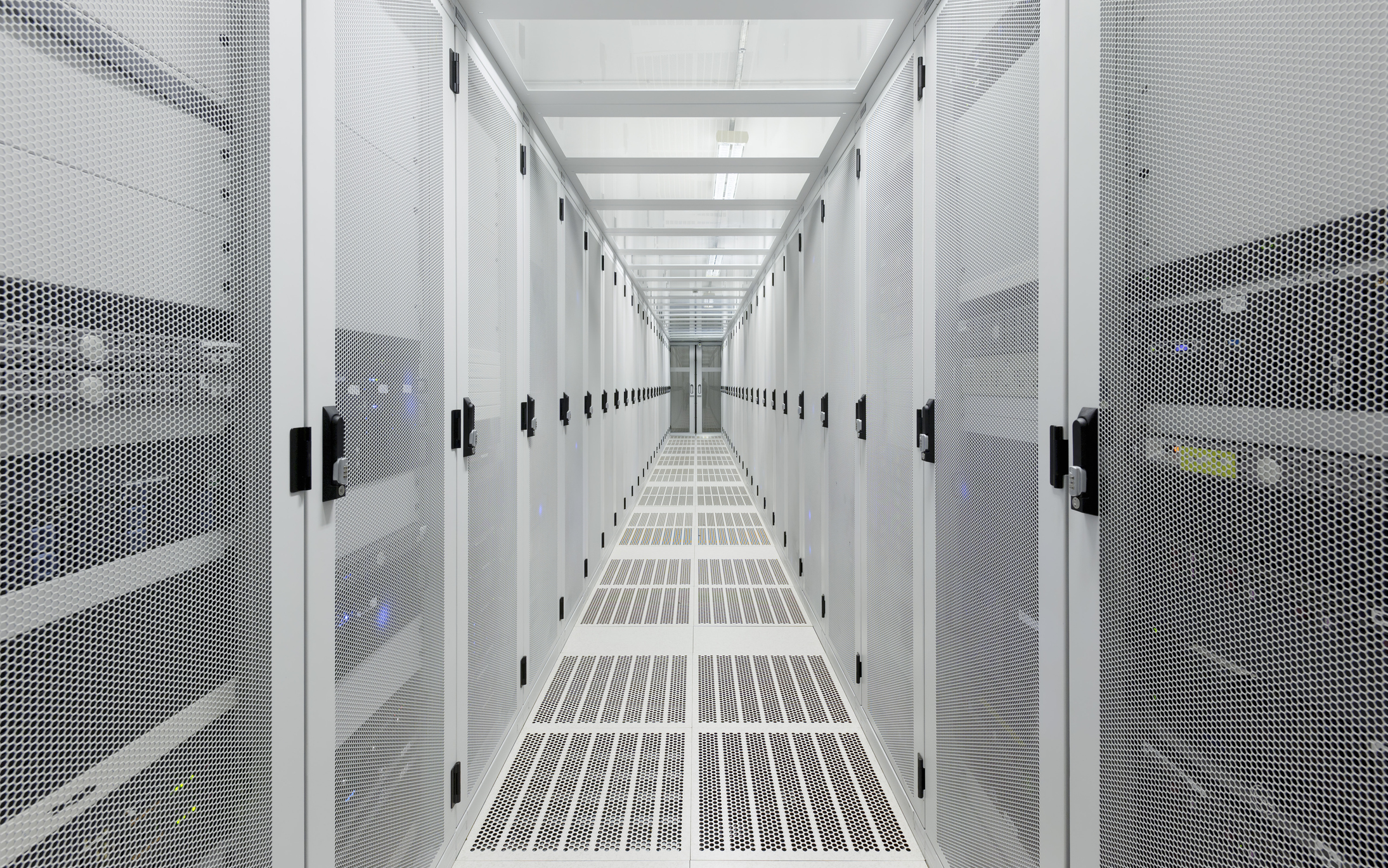
This past Wednesday, a coalition of more than a dozen environmental groups gathered in the parking lot of the Hanover Humane Society in Ashland, Va., to demand a statewide halt to new data center construction in the Commonwealth. Their backdrop was pointed: a few hundred feet away a hyperscale data center was under construction. That facility was permitted by-right, meaning it received no public hearing or vote before county supervisors gave it the green light.
The rally coincided with the launch of the coalition’s “Pause to Protect” policy platform, which calls for a moratorium on new data center construction until the industry can meet specific standards on clean energy, water use, and transparency. Under the platform, data centers would be required to fully disclose water and energy use across planning, construction, and operation; shield other ratepayers from data-center-driven generation, transmission, and pipeline costs; run on clean energy with non-polluting backup power and no “behind the meter” polluting sources; limit cooling-water use, particularly in water scarcity areas; and avoid sensitive sites such as prime farmland, wetlands, forests, and floodplains.
The scale of the issue is difficult to overstate. With nearly 700 data centers either built or planned, Virginia is the data center capital of the world. Water has emerged as a central flashpoint. The Virginia Policy Manager at one environmental outfit that warned that the 64,000-square-mile Chesapeake Bay watershed sits at “ground zero,” and explained that, at the “Last General Assembly, we did not support a moratory,” calling the shift “representative of how this issue has moved.” Meanwhile, the Department of Environmental Quality is studying areas east of Interstate 95 for designation as “water scarcity areas,” which would limit development of facilities using evaporative cooling systems that can consume hundreds of millions of gallons annually. That report is expected this month.
The legislative picture is moving quickly. Several moratorium bills have already been filed for the 2027 General Assembly session, which opens January 13. Gov. Abigail Spanberger, for her part, unveiled a Data Center Accountability Framework last month that would ban nondisclosure agreements, enhance air and water protections, require cleaner backup generators, and shift more infrastructure costs to the industry. Notably, however, the framework stops short of an outright pause, drawing criticism from coalition members. “We don’t have six months, we don’t have a year,” said one local advocate. “The pause needs to happen now”
On the other side, the industry remains opposed. The Data Center Coalition argued that “a top-down, statewide moratorium is the wrong approach to regulating this economically impactful industry,” warning that states signaling they are “closed for business” risk losing long-term investment, high-wage jobs, and critical tax revenue to neighboring states.
For developers, utilities, landowners, and localities, the stakes are significant. Even short of a moratorium, the direction of travel — toward mandatory water and energy disclosure, siting limits, cost allocation through new large-load rate classes, and noise and backup-generator standards — suggests that the era of by-right, low-scrutiny data center approvals in Virginia may be drawing to a close. Projects in the pipeline should be evaluated now for exposure to these emerging requirements. As one coalition attorney put it, utility reforms underway at the state utility commission are “slow” and “incomplete” —and advocates have made clear they intend to press the General Assembly to go further come January.