

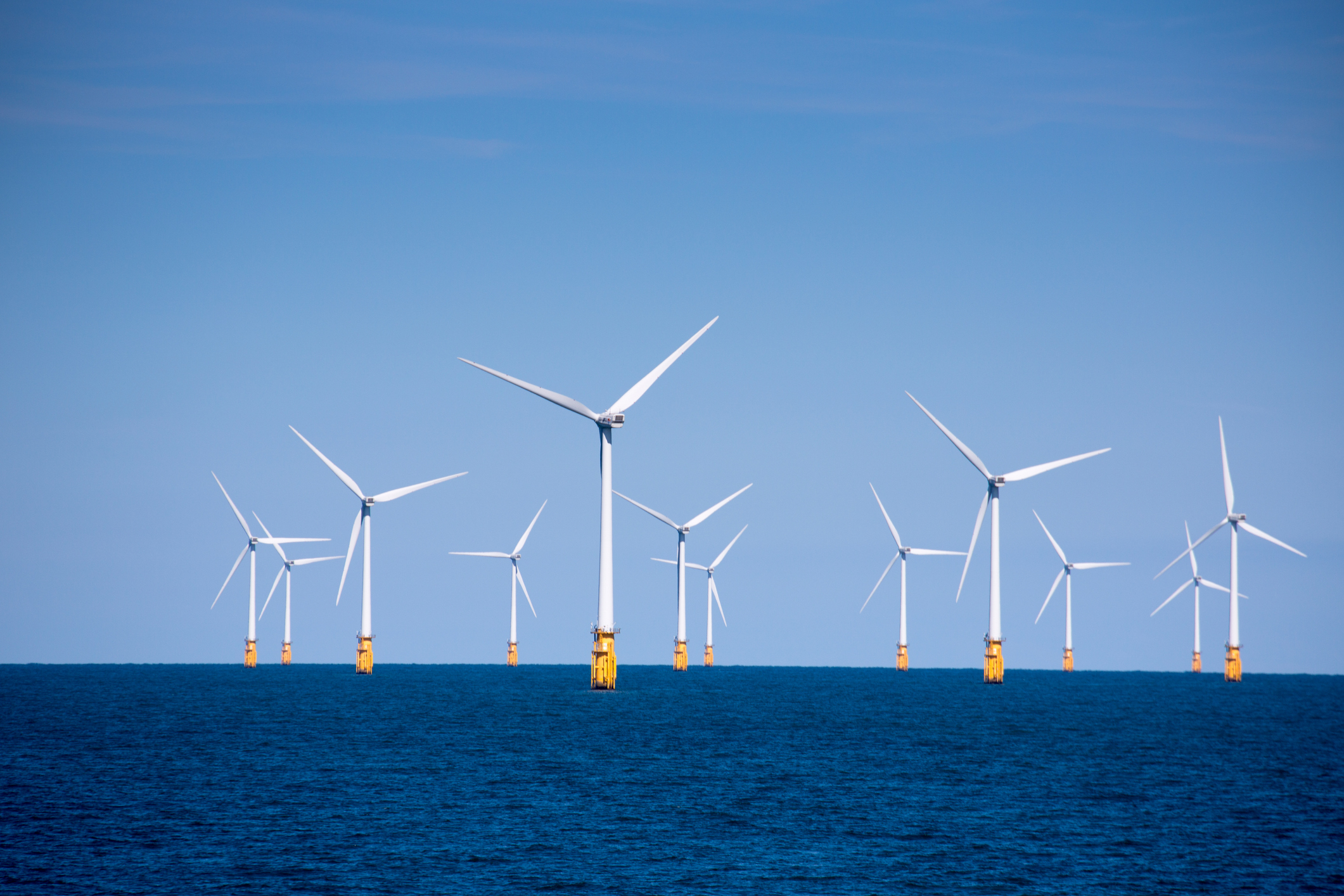
America’s largest-ever wind farm began operations last month. Located in New Mexico, SunZia is the largest renewable energy infrastructure project in U.S. history. Pattern Energy began construction on the project in 2023, and SunZia is expected to power more than one million homes in the Southwest with affordable, reliable energy.
Most of the electricity generated by SunZia will be exported to Arizona and Southern California. To deliver that power, Pattern Energy also constructed a 550-mile, high-voltage direct current transmission line running from the SunZia wind farm in central New Mexico to south-central Arizona.
The wind farm is the first-of-its-kind in size and scale. It is composed of 916 wind turbines and has a total net generating capacity of 3,650 megawatts (MW). Its capacity is more than three times larger than the next two largest wind farms, Alta Wind in Southern California (1,098 MW) and Great Prairie in northern Texas (1,027 MW). With SunZia’s addition, wind energy now accounts for 45 percent of New Mexico’s power capacity, followed by solar and natural gas, each at 19 percent.
SunZia is considered a landmark project because it is the product of nearly two decades of permitting and planning. It will also likely be the country’s last wind project for some time. Changes in the federal regulatory landscape, inflation, supply-chain challenges, long waits to connect to power grids, and shifting tax credits have all come together to create significant obstacles for future wind projects. The wind sector must also compete with other renewable energy sources. Solar power, for example, is generally cheaper and faster to install and continues to provide the largest share of new annual power capacity.
Large wind farms spanning multiple states, such as SunZia, require a complex array of permits and approvals from federal, state, and local agencies and authorities. Key permits and approvals for projects like SunZia include right of way and land use approvals from the Bureau of Land Management, state utility commission approvals, military and defense clearances, and local zoning permits. Recent changes in federal regulations have made obtaining the necessary approvals more challenging, and the development pipeline for future projects like SunZia is uncertain.
Nevertheless, SunZia illustrates the type of infrastructure investment that may be needed to meet surging energy demand. The project includes not only new energy generation capacity, but also the transmission infrastructure required to deliver that power across long distances. Large scale transmission (moving large amounts of electricity efficiently across long distances), will be critical to meeting future power needs.
Despite the challenges facing the wind sector, projects like SunZia demonstrate how renewable energy generation and grid infrastructure can work together to deliver affordable and reliable clean energy.