

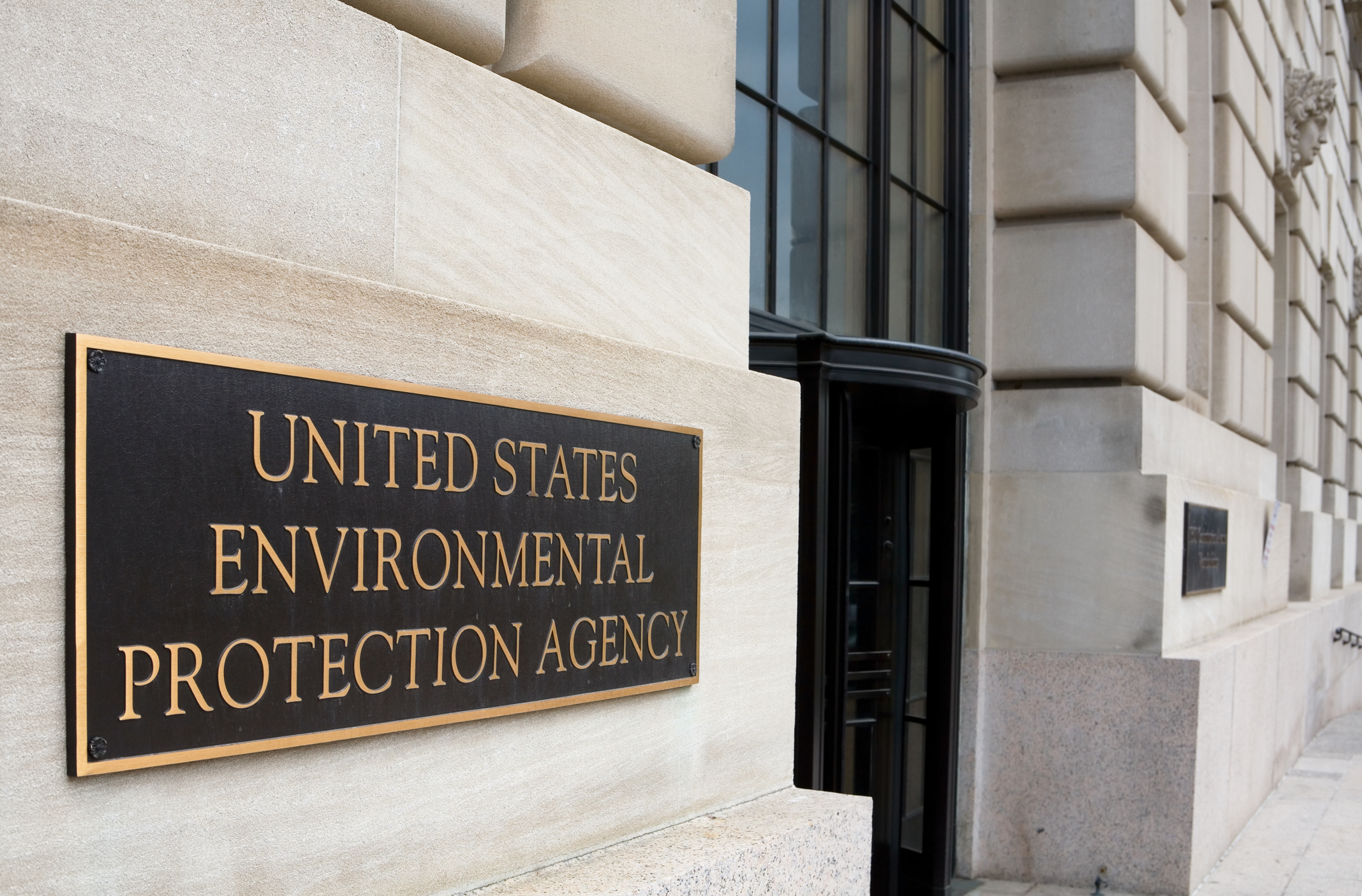
The EPA on Nov. 10 held its first public demonstration of emerging technologies designed to combat lead pipe exposure. The event took place at the agency’s Lead Service Line Identification Test Bed in Edison, N.J., which opened in 2025 and features six pipe sections built to evaluate different performance attributes. Ultimately, these technologies aim to identify lead service lines faster, more cheaply, and with less disruption than traditional methods —meaning less excavation, lower costs, and reduced labor. They could also help utilities and municipalities meet one of the toughest requirements under the Lead and Copper Rule Improvements (LCRI): determining the material of their unknown service lines.
Regulatory Context and Upcoming Deadlines
Under the LCRI, water systems must replace all lead service lines and galvanized requiring replacement (GRR) lines under their control within 10 years, with limited exceptions. The rule builds upon the inventory mandates of the 2021 Lead and Copper Rule Revisions by requiring systems to make their inventories publicly accessible, annually notify residents served by lead, GRR, and unknown lines, and implement a validation process to confirm inventory accuracy.
Water systems also face several critical compliance milestones over the next decade. The initial inventory — covering every service line regardless of ownership — was due on October 16, 2024. The baseline inventory is due November 1, 2027, and must add connector materials and any updated or new information on service line materials and locations. Several state agencies also require each line to be tied to a street address or other unique location identifier. November 1, 2027, is also the LCRI general compliance date, when replacement plans are due, and when the lead action level drops from 15 to 10 parts per billion. Annual inventory updates will then be first due on January 30, 2029. However, two later deadlines matter most for the identification question because systems are required to validate a subset of their non-lead lines. Systems on the standard schedule must finish validation by December 31, 2034, and submit results to the state by January 30, 2035. Most systems then have until December 31, 2037, to identify every unknown line.
The Compliance Challenge: Millions of Unknown Lines
The primary compliance risk for utilities stems from the sheer volume of unverified pipes. In the EPA’s federal reporting for the second quarter of 2026, states reported roughly 22.5 million service lines of unknown material — accounting for 22 percent of all reported lines. By comparison, states reported about 2.2 million confirmed lead lines and 1.00 million GRR lines. While the EPA’s best national estimate sits at roughly 4 million lead service lines, the Edison test bed’s own webpage references “over five million known lead service lines.” Furthermore, foundational compliance gaps persist; one industry presentation noted that more than 4,000 of roughly 49,400 community water systems had still not filed initial inventories as of the first quarter of 2026.
To determine a pipe’s material, utilities currently rely on physical excavation and visual inspection — a slow and expensive process that EPA researchers have long called the “gold standard” for verification. Under the rule, a line can only be classified as non-lead using “an evidence-based record, method, or technique.” Whether emerging technologies can legally satisfy this standard remains the central question.
Emerging Technologies on Display
At the Edison demonstration, university researchers showcased two distinct non-invasive approaches. Dartmouth’s electromagnetic induction technology uses electromagnetic fields to induce and measure responses from buried metal pipes, helping crews distinguish lead from copper without digging up the line. Drexel’s stress wave technology instead relies on mechanical vibrations to locate lead lines. Technicians generate vibrations by striking an extension rod connected to an accessible service line valve.
While neither concept is entirely new — the EPA’s 2022 inventory guidance listed both electrical resistance testing and stress wave propagation as emerging techniques — the test bed marks the first time these methods are being evaluated under controlled, independent conditions.
Takeaways for Utilities and Municipalities
Notably, the EPA emphasizes that the Edison test bed is not a certification program. Instead, its goal is to generate objective performance data so states, water systems, and regulators can make informed decisions. In practice, this means primacy agencies—not the EPA—will decide whether a specific technology’s output is reliable enough to support a “non-lead” classification.
For utilities and municipalities, the immediate takeaway is the need to carefully document the basis for every pipe classification. Each non-lead designation must meet the evidence-based standard, and utilities and municipalities should secure primacy agency approval before relying on any new identification method. Therefore, until performance data is published and primacy agencies issue clear guidance, these emerging technologies should be treated as promising supplements to traditional records review and physical verification, rather than outright replacements.