

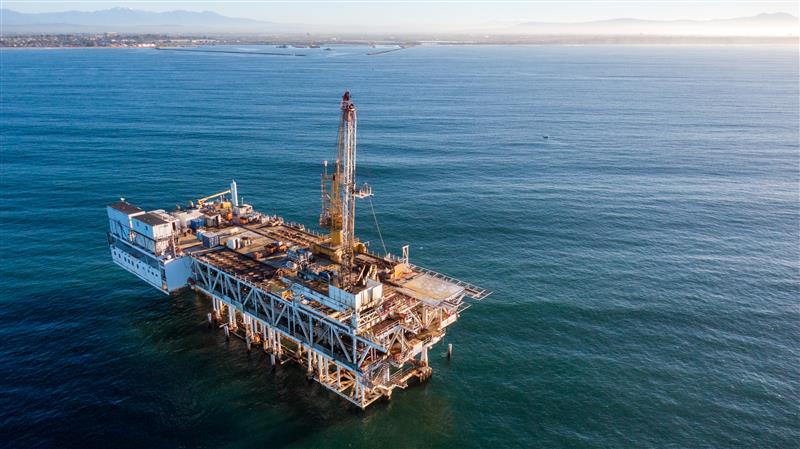
On March 13, 2026, the federal government directed Sable Offshore Corp. to restart operations of the Santa Ynez Pipeline off the coast of Santa Barbara, which was suspended by California in 2015 following the Refugio Oil Spill. The purpose of the recent directive, according to U.S. Energy Secretary Chris Wright, is to “address supply disruption risks.” Questions now arise, however, as to state permitting authority over state energy infrastructure.
President Trump’s executive order relies on a recently issued legal opinion from the U.S. Department of Justice, which asserts that the president can use the Defense Production Act (DPA) to preempt state law, including energy and environmental permitting laws. The opinion further states that the DPA allows the president to allocate materials and services deemed “necessary or appropriate to promote national defense” and to “maximize domestic energy supplies,” and that such materials and services include the transportation of oil and petroleum products. Notably, in support of this opinion, the DOJ cited two federal district court rulings that granted the use of the DPA to keep meatpacking plants open during the COVID-19 pandemic; both district court rulings concluded that state tort laws were preempted.
In response to the recent order, the state filed a lawsuit in the Northern District of California this week challenging the use of the DPA to restart the Santa Ynez Pipeline. The suit claims that the restart of the Santa Ynez Pipeline – which resumed operation on March 14 – does not have the necessary state and federal permits for pipeline operations, and runs contrary to a California state court’s preliminary injunction on the pipeline’s operation, along with a 2020 consent decree between Sable and the state. California claims violations of the Administrative Procedure Act, the U.S. Constitution’s separation of powers doctrine, and the Tenth Amendment. The lawsuit seeks, among other things, to vacate the recent order and to bar the Department of Energy from allowing the operation of a state pipeline system without state law approvals.
The broad assertion of presidential authority under the DPA could conceivably extend to state permitting of other oil and gas infrastructure, such as production fields, refineries, and storage terminals, perhaps even electricity infrastructure. The lawsuit filed by California this week will be one to watch as to whether such broad presidential authority will be upheld. A copy of the Complaint can be found here: Complaint for Declaratory and Injunctive and Other Relief [1].pdf