

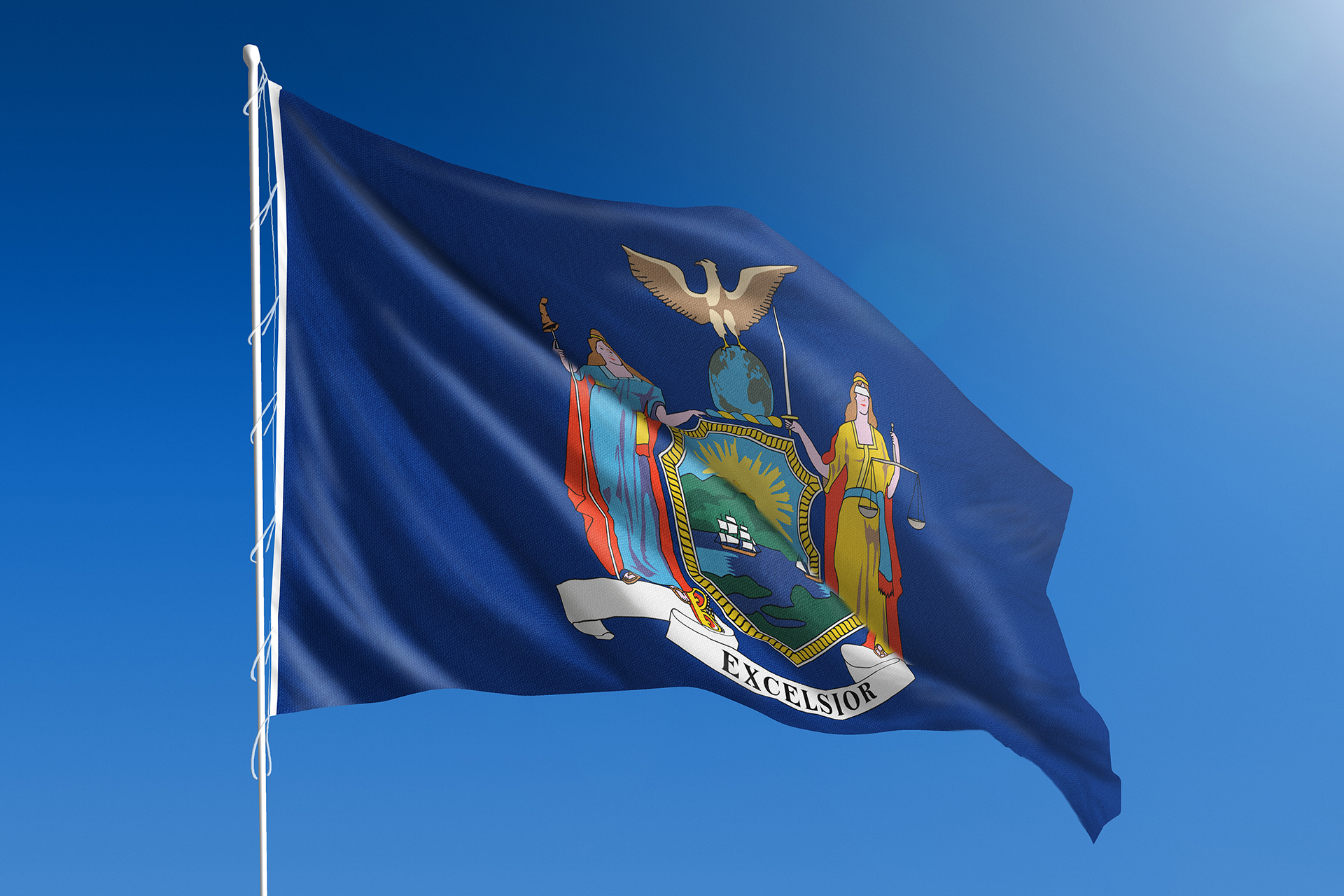
A year has passed since New York Gov. Kathy Hochul announced her intention of building a zero-emission nuclear power plant and making the state a nuclear powerhouse (covered by ELM here).
Since then, energy-monopolizing data centers have proliferated throughout the United States (covered by ELM here) to the extent that Hochul recently declared a moratorium on their construction in the Empire State (covered by ELM here) as electrical costs for regular Americans have skyrocketed, while demand is only expected to increase by around 25 percent.
Accordingly, the Hochul administration’s year-old move toward expanding New York’s nuclear capacity by implementing a plan called the Nuclear Reliability Backbone — which has a goal of reaching 8.4 gigawatts of zero-emission nuclear power to transition to cleaner energy — seems, to many, a prescient ambition.
To assist these efforts, the New York State Energy Research and Development recently issued a report in which nuclear power plants built in New York decades ago during an earlier nuclear boom — (but either abandoned or underfunded due to a wave of fear following nuclear disasters such as Chernobyl) — are referred to as “an under-appreciated asset” because “nuclear power produces no direct greenhouse gas emissions or co-pollutants during operation, and its lifecycle emissions are among the lowest of any generation technology.”
One of those nuclear assets is Nine Mile Point, which is located on the shore of Lake Ontario and has produced carbon-free energy since the late 1960s. Nine Mile is increasingly being considered as a site to support a new reactor that would further the Nuclear Reliability Backbone aims. Indeed, Nine Mile is already home to half of the reactors within New York that already generate about one-fifth of the state’s electricity. (The Fitzpatrick Nuclear Power Plant, also built during a prior nuclear boom, is a jog down the road.)
Not only does Hochul want to reuse these New York nuclear assets, but she wants to double the current nuclear output of Fitzpatrick, Nine Mile, and R.E. Ginna nuclear reactors by building five gigawatts of nuclear power in the next few years – enough to power 4.5 million homes. This is in addition to the 1 gigawatt of power Hochul announced last year that would be built by New York Power Authority upstate.
But as was the case upon Hochul’s nuclear announcement last July, this pivot back to nuclear power has its critics. One such critic, a local proponent of alternative power solutions, expressed his concern about nuclear worst-case scenarios, “Whether it’s the refining process, the mining and refining process for nuclear fuel or the storage process for spent fuel, radiation is released into the environment and into the world. It’s true that human beings have come a long way in in terms of safety when it comes to nuclear energy. But all it takes is one little accident for a catastrophe to happen.” The same critic suggested energy based on “true” renewables such as solar and wind.
The Trump Administration, however, has a history of criticizing and proactively ending solar and wind power projects, including in the president’s former home state. For instance, just a few days ago, the U.S. Department of Agriculture and the Environmental Protection Agency heads both signed a letter lambasting Hochul’s industrialization of upstate farmland for the purposes of solar energy facilities, claiming such projects would be costly for the neighboring rural communities.
In any event, the Hochul administration has invited the public to submit its thoughts and opinions about New York’s nuclear push to meet our ever-insatiable need for energy. The deadline is August 10.