

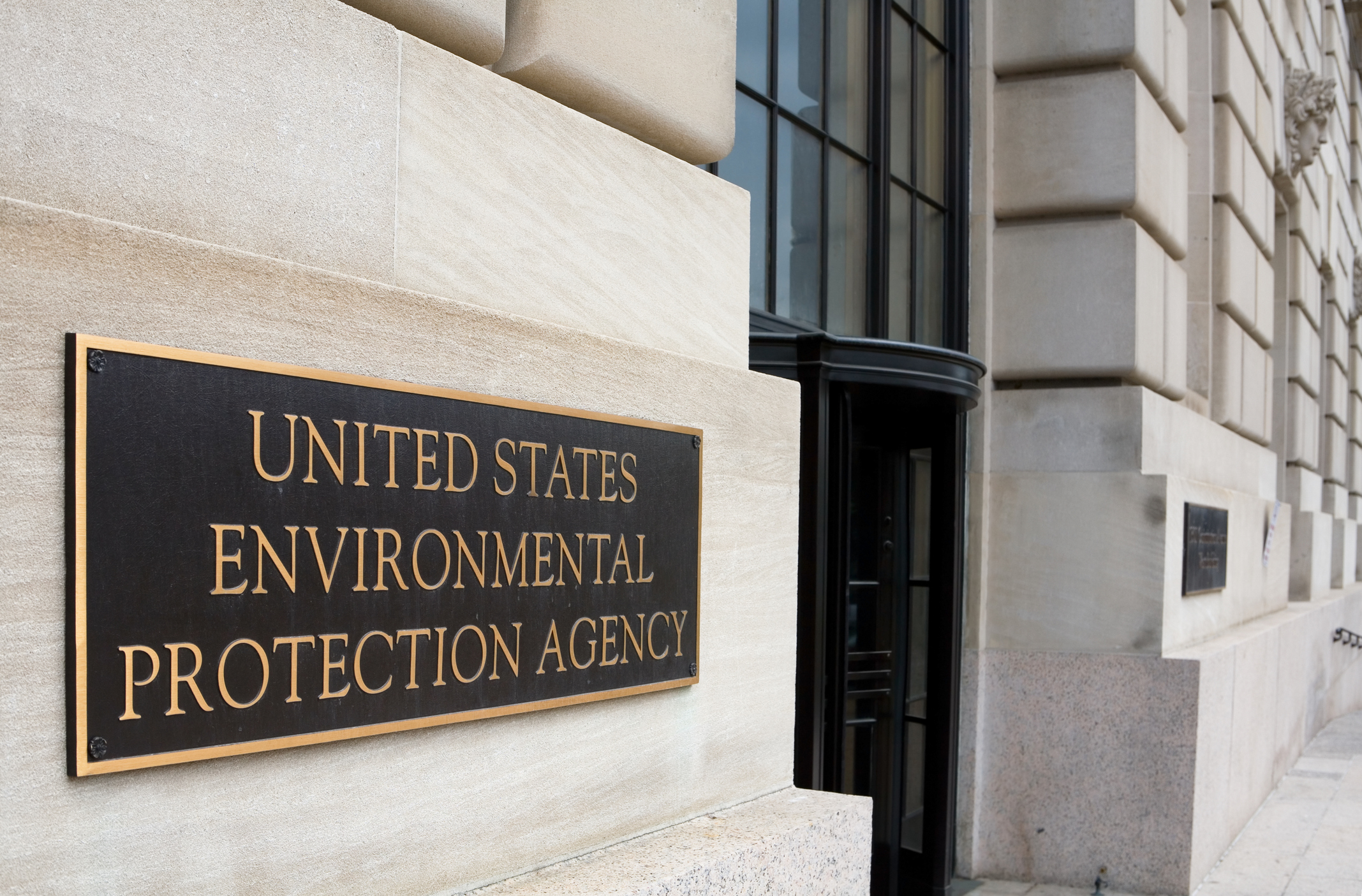
A coalition of more than 20 states and several cities led by New York Attorney General Letitia James lodged a petition on Oct. 1 in the U.S. Court of Appeals for the D.C. Circuit, challenging the Environmental Protection Agency’s recent repeal of greenhouse gas-emission limits for coal-and-gas-fired power plants (covered by Goldberg Segalla’s ELM here: EPA Surrenders its Power Over Power-Plant Emissions).
The Lawsuit
In New York et al v. EPA, the coalition contends that the EPA discarded pollution limits without adequately weighing alternatives or accounting for health and climate consequences, thus rendering the repeal arbitrary and unlawful. The coalition further contends that the repeal will worsen extreme heat, storms, flooding, and wildfires. Additionally, separate from the petition, the coalition put the EPA on notice that it plans to bring a separate legal action over the agency’s ongoing inaction regarding greenhouse gas pollution from existing power plants.
The EPA’s final rule, which was issued last month, eliminated virtually all federal greenhouse gas standards established in April 2024 under the Clean Air Act. In eliminating the aforementioned standards, the EPA claimed the previous standards exceeded its authority under Section 111 of the Clean Air Act per the U.S. Supreme Court’s 2022 decision in West Virginia et al. v. EPA et al. In West Virginia, the Supreme Court held that although Section 111 generally gives the EPA authority to set emissions standards for new and existing sources of air pollution, the EPA could not cap emissions “at a level that will force a nationwide transition away from the use of coal to generate electricity.” Citing to the aforementioned case, the EPA further proposed to eliminate all remaining greenhouse gas regulations for power plants.
We’ve Seen This Before
The EPA previously used this same argument in February when it repealed an Obama-era finding that greenhouse gases engender people’s health. Following the repeal, the EPA concluded that the Clean Air Act does not allow regulations aimed at reducing greenhouse gas emissions and thus, scaled back previously set vehicle emissions standards. The scale-back ultimately sparked lawsuits – currently pending – accusing the EPA of defying its Clean Air Act obligations, in addition to precedent established by the U.S. Supreme Court.
‘Air Pollution’ Definition
This year’s February and September EPA repeals of previous emissions standards rely on the EPA’s proposed meaning of “air pollution” under the Clean Air Act. The current administration’s EPA claims that “air pollution,” as defined by the Clean Air Act, means pollution that threatens health through local or regional exposure, and that as a result, global climate change concerns, in general, fail to qualify under Section 111 of the Clean Air Act. By that logic, the EPA claims it has no legal rationale for regulating greenhouse gas emissions from the power sector – and potentially other sectors – subject to its oversight because eliminating emissions would be futile in terms of impacting global climate change.
It is worth noting that the U.S. Supreme Court in 2007’s Massachusetts v. EPA held that greenhouse gas emissions met the definition of pollutants under the Clean Air Act. The EPA, however, claims that its recent rollbacks are in line with Massachusetts and that while Massachusetts defined greenhouse gases as a pollutant, the case does not require the EPA to regulate greenhouse gasses. The EPA further cited to various post-Massachusetts decisions where the U.S. Supreme Court limited the scope of the EAP’s Clean Air Act authority (including in the aforementioned West Viriginia decision).
* * *
Ultimately, if the EPA’s limiting definition of ‘air pollution’ holds up in court (i.e., that “air pollution” under the Clean Air Act excludes global climate effects), future administrations will have difficulty reinstating emissions standards on climate change rationales. What remains to be seen, however, is whether the courts in New York et al. v. EPA or other pending matters will agree with the EPA’s definition. Pursuant to the U.S. Supreme Court’s 2024 decision in Loper Bright v. Raimondo, courts will perform their own analysis of purportedly ambiguous Clean Air Act statutory terms rather than defer to the EPA’s interpretation.